
Heritage & Daily Life — Visible Culture
Culture in Ghana is not locked away in museums — it is alive in the food we eat, the clothes we wear, and the way we interact. Every meal, every garment, every handshake carries the weight of tradition.
Culinary Heritage
Fufu and Light Soup
The most beloved meal in Ghanaian homes
Fufu is more than a meal — it is a cultural institution. Made by pounding boiled cassava and plantain in a wooden mortar with a heavy pestle, the preparation requires rhythm, coordination, and cooperation between the person holding the pestle and the one turning the mortar — a dance of trust and timing.
The light soup — a rich, spicy broth made with tomatoes, onions, pepper, and meat or fish — is the perfect companion. Every family has its own recipe, and every region claims to make it best. The soup's "lightness" refers not to a lack of flavour but to its clear, vibrant quality.
Eating fufu is done with the right hand, rolling small balls and dipping them into the soup. It is traditionally a communal experience — families gather around a shared bowl. In many Ghanaian households, the sound of the fufu mortar in the early evening is the soundtrack of home.
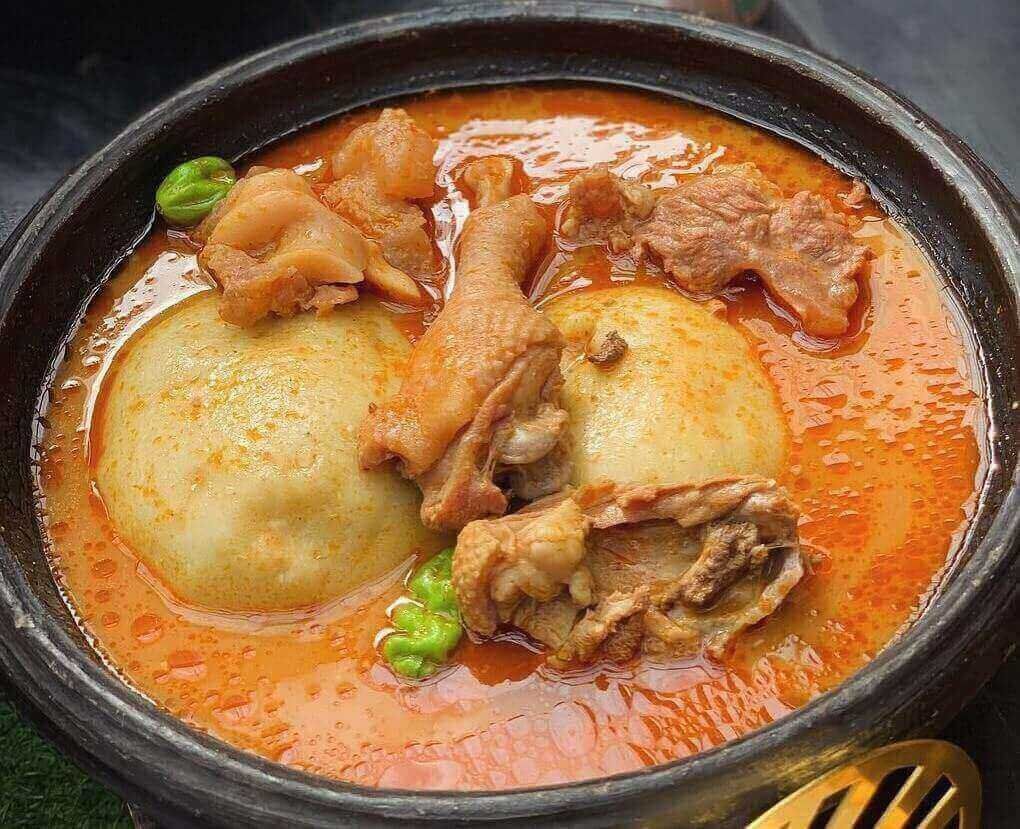
"Fufu ne Light Soup — the rhythm of cooperation"
Textile Heritage
Clothing & Adinkra
From Bolgatanga to the world stage
The Northern Smock (Batakari) is a hand-woven garment from Bolgatanga in the Upper East Region. Worn by men across northern Ghana — and increasingly across the entire country — the Batakari is a symbol of northern identity and craftsmanship. Each smock is unique, woven on narrow strip looms with patterns carrying cultural significance.
Adinkra symbols are visual representations of concepts and proverbs developed by the Akan people. Each symbol has a name and a meaning — stamped onto cloth, carved into furniture, and incorporated into modern design.
Gye Nyame
Except GodSankofa
Go back and fetch itNkyinkyim
Initiative, dynamismFawohodie
Independence, freedom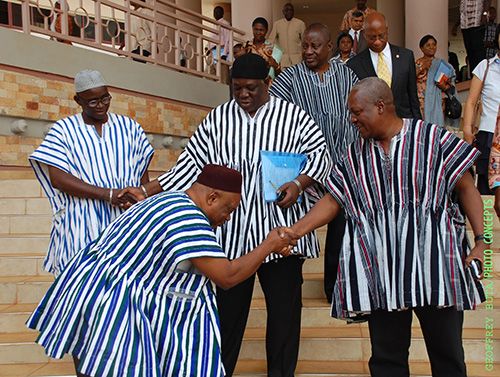 Bolgatanga
Cultural Etiquette
The Right Hand Rule
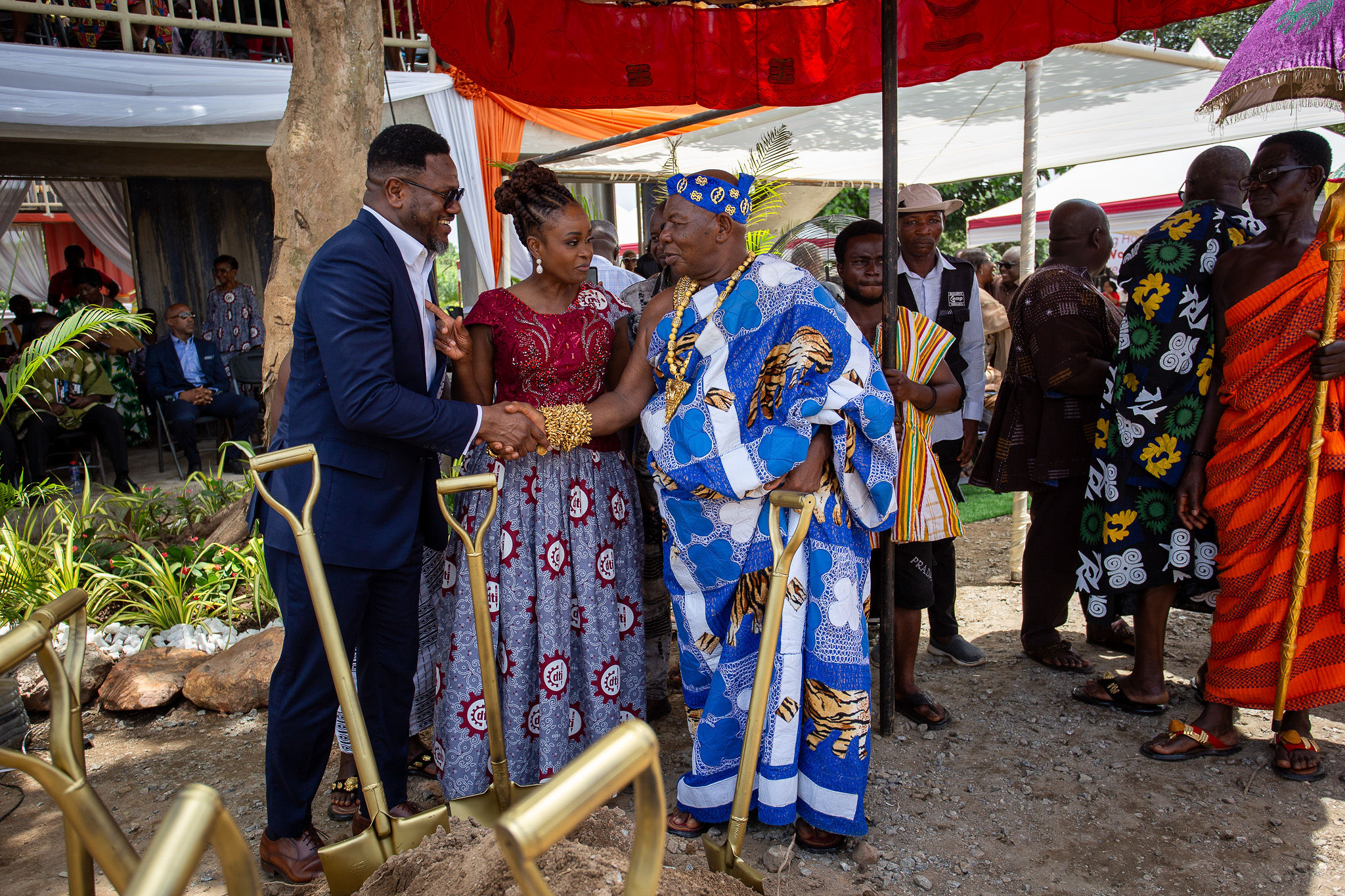
In Ghanaian culture, the left hand is considered unclean and is never used for giving, receiving, eating, or pointing. This practice is deeply rooted in tradition and observed across all ethnic groups. To give or receive with the left hand is considered disrespectful — even offensive.
When greeting an elder, you use the right hand to shake, while the left hand supports the right forearm as a sign of added respect. When offering something to a chief, both hands may be used — the right doing the giving, the left supporting underneath.
This simple yet profound practice teaches children from a very young age that respect is not optional — it is woven into the fabric of daily life. It is one of the most visible markers of Ghanaian cultural identity.
"The right hand gives, the left hand supports — this is how a nation respects itself."